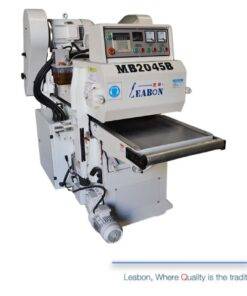


Applications:
HJD-M2045B can simultaneously cut two planes opposite to the small-diameter wood while achieving the same thickness and smooth veneer.Features:
- Piano key type pressure mechanism with safety guard for maximum safety.
- Pressure pieces can be individually adjusted.
- Taiwan Shilin Inverter for adjusting speed. Fast and smooth planing.
- Ruggedly constructed machine frame gives superior operation stability.
- Large, heavy table and base for solid support of stock. Table surface is precision ground.
- Rugged, 3-knife cutterhead is precision ground and dynamically balanced for smooth cutting.
- Anti-kickback fingers provided at Infeed side prevent stock kickback.
- Front and rear table rollers provide added smoothness of stock feeding.

Taiwan heavy cut 6PCS spiral cutter

Use maintenance-free reducer

Min. processing length of short material guide is 150mm

Feeding adopts frequency adjustment, the feeding speed can be adjusted according to the hardness of wood.

The proximity sensor for thickness display is used to control the motor and stop by inspecting rotation circles of motor to ensure adjustment of precision.

The product is provided with imported digital display device. which can be operated directly to processing thickness from operating panel with the accuracy up to 0.05mm;besides, upper and lower planning motor is provided with ammeter for visual observing if it is over loaded while working.
Factory Images


Our Certificates

How Planers and Moulders Work
A surface planer flattens one face and squares an edge; a thickness planer makes the board a consistent thickness; a four-side moulder (4-sided planer) joints, thicknesses and profiles all four sides in one pass using stacked cutterheads. They prepare rough sawn timber into smooth, dimensionally accurate stock ready for furniture and flooring.
Double-sided Planer Series M450C can simultaneously cut two planes opposite to the small-diameter wood while achieving the same thickness and smooth veneer. 450mm working width is suitable for normal workpiece processing.
Frequently Asked Questions
- Q: What is the difference between a planer and a moulder?
- A: A planer squares and thicknesses flat stock; a four-side moulder also cuts decorative or functional profiles (bead, tongue-and-groove) on all sides in a single pass.
- Q: What wood can a planer or moulder process?
- A: Softwood and hardwood solid timber; max width and thickness vary by model — confirm the working size on the spec sheet.
- Q: Why use a four-side moulder instead of a separate planer?
- A: It joints, thicknesses and profiles in one setup, holding tolerances tight and raising output for flooring, skirting and mouldings.
- Q: How fine a surface finish do they give?
- A: With sharp blades and correct feed speed they leave a smooth, ready-to-finish surface; spiral/helical cutterheads reduce tear-out on figured wood.
- Q: What is the typical working width?
- A: Bench planers start around 300 mm; industrial moulders run 200–600 mm wide — pick to match your board sizes.
- Q: Do planers handle wet or green timber?
- A: They are built for seasoned timber; very wet or resinous wood dulls blades faster, so dry stock first.
Browse more Planer and Moulder Machine range, or contact Leabon for a confirmed quotation.