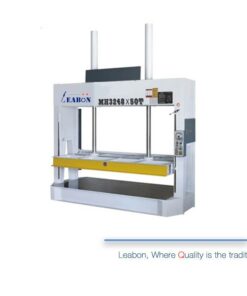


Leabon Heavy Duty Woodworking Thicknesser Machine Main Features:
The machine body is made from hard and thick steel, guaranteed its stability and duration.
Regarding electric parts, Schneider is optional against your request and cost responsibility.
Optional with feeder as well, more safe.
High precision and efficiency, safe.
It can planing many kinds of panel material
All our export machines inspected by overseas dept. independently with detail photo and video to customers. We are trying all the best to insure your worry-free on the purchasing and operation of all our machines.
PRODUCT DETAILS

Motor belt drive spindle structure

Gearbox Drive Details

Worktable lift handwheel, scale display

Device dust outlet
WORKSHOP PHOTO


Our Certificates

How Planers and Moulders Work
A surface planer flattens one face and squares an edge; a thickness planer makes the board a consistent thickness; a four-side moulder (4-sided planer) joints, thicknesses and profiles all four sides in one pass using stacked cutterheads. They prepare rough sawn timber into smooth, dimensionally accurate stock ready for furniture and flooring.
MB106BM Single Side Heavy Duty Woodworking Thicknesser It’s widely used in woodworking industry such as board making, laminated wood, board, flooring, packing case and pallet etc., as well as building materials. We have different width wood thicknesser from 300 to 800mm width, made by a professional wood thicknesser manufacturer in China.
Frequently Asked Questions
- Q: What is the difference between a planer and a moulder?
- A: A planer squares and thicknesses flat stock; a four-side moulder also cuts decorative or functional profiles (bead, tongue-and-groove) on all sides in a single pass.
- Q: What wood can a planer or moulder process?
- A: Softwood and hardwood solid timber; max width and thickness vary by model — confirm the working size on the spec sheet.
- Q: Why use a four-side moulder instead of a separate planer?
- A: It joints, thicknesses and profiles in one setup, holding tolerances tight and raising output for flooring, skirting and mouldings.
- Q: How fine a surface finish do they give?
- A: With sharp blades and correct feed speed they leave a smooth, ready-to-finish surface; spiral/helical cutterheads reduce tear-out on figured wood.
- Q: What is the typical working width?
- A: Bench planers start around 300 mm; industrial moulders run 200–600 mm wide — pick to match your board sizes.
- Q: Do planers handle wet or green timber?
- A: They are built for seasoned timber; very wet or resinous wood dulls blades faster, so dry stock first.
Browse more Planer and Moulder Machine range, or contact Leabon for a confirmed quotation.