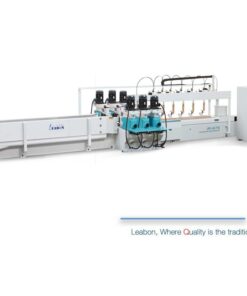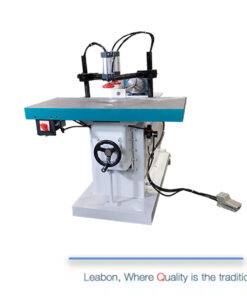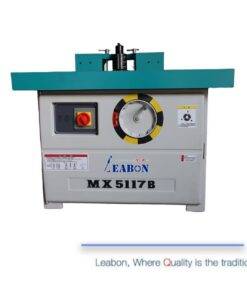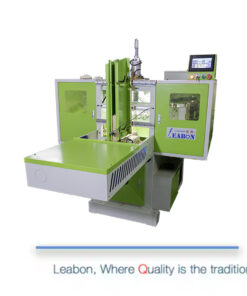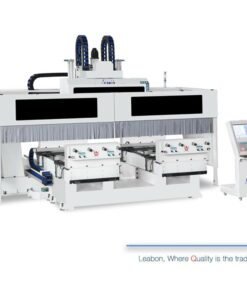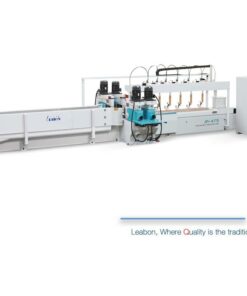
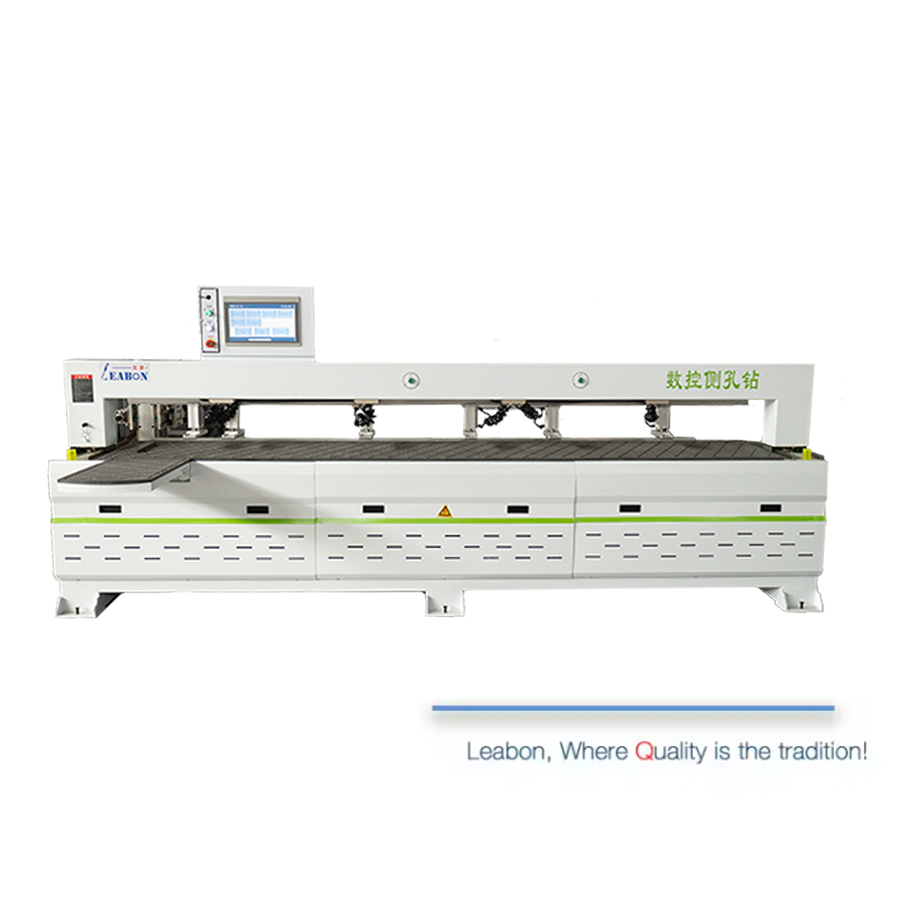
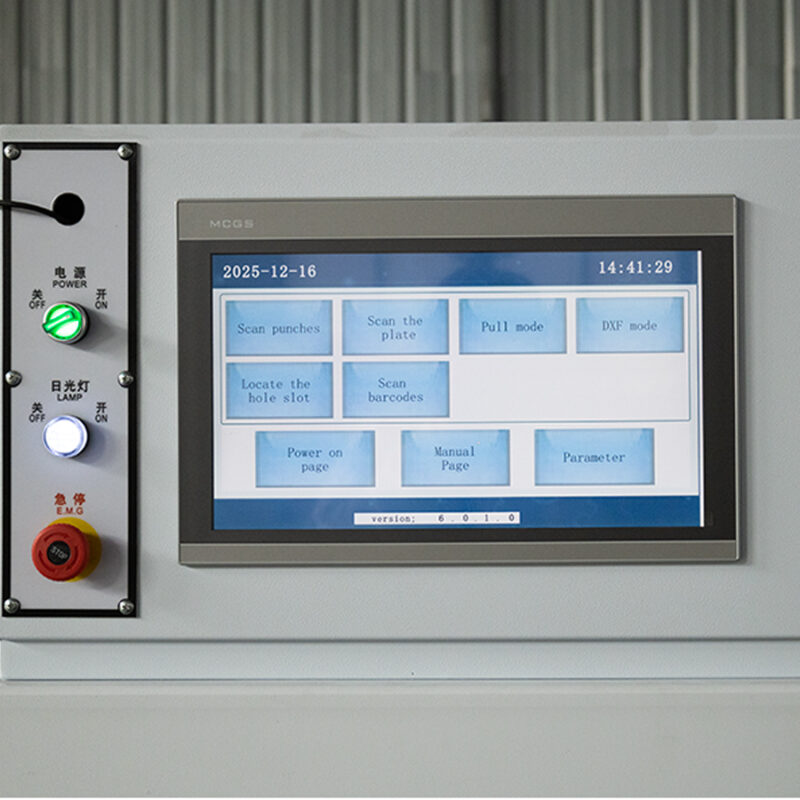
The machine uses a PLC microcomputer touch screen for real-time control, resulting in a low failure rate and ease of operation.
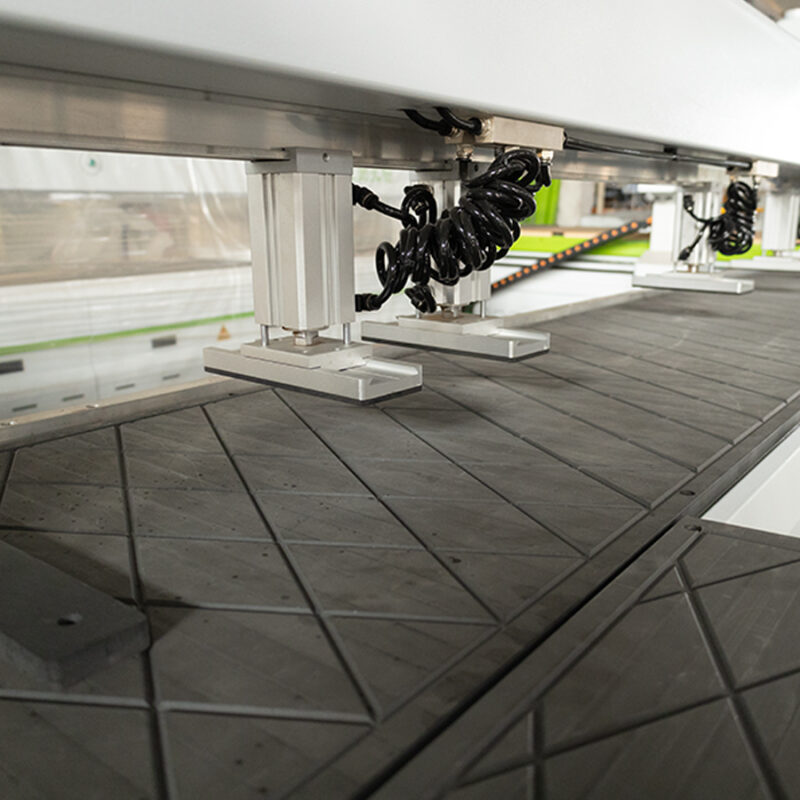
The movable high-pressure cylinder can accurately press and hold the fixed sheet material, preventing it from sliding.
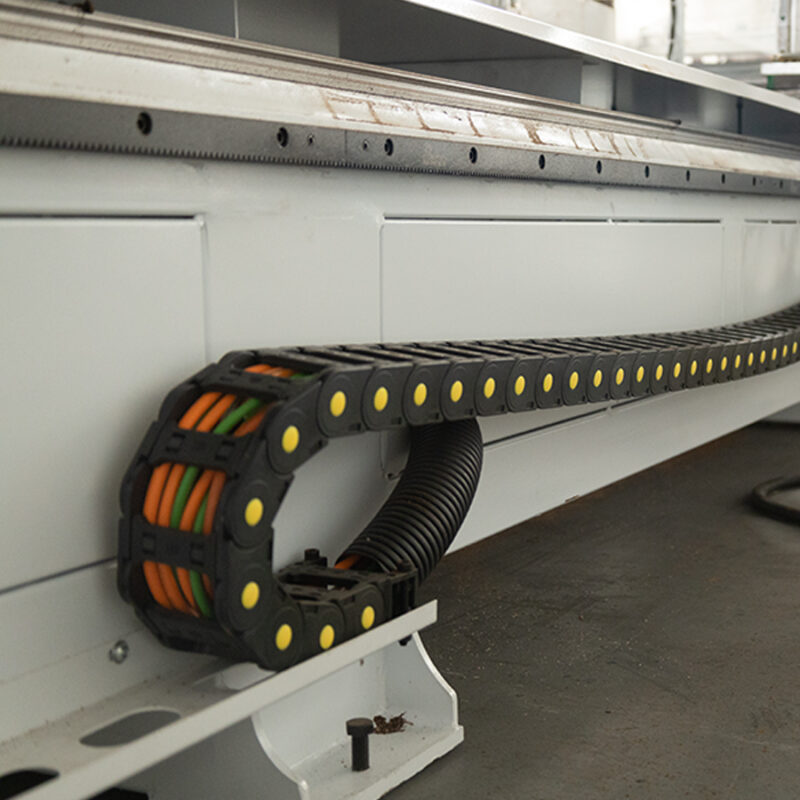
Cable carriers protect the machine’s air hoses, oil lines, and electrical wires, safeguarding the wiring and piping during machine operation.

American Banner photoelectric sensors: precise positioning and sensitive response.
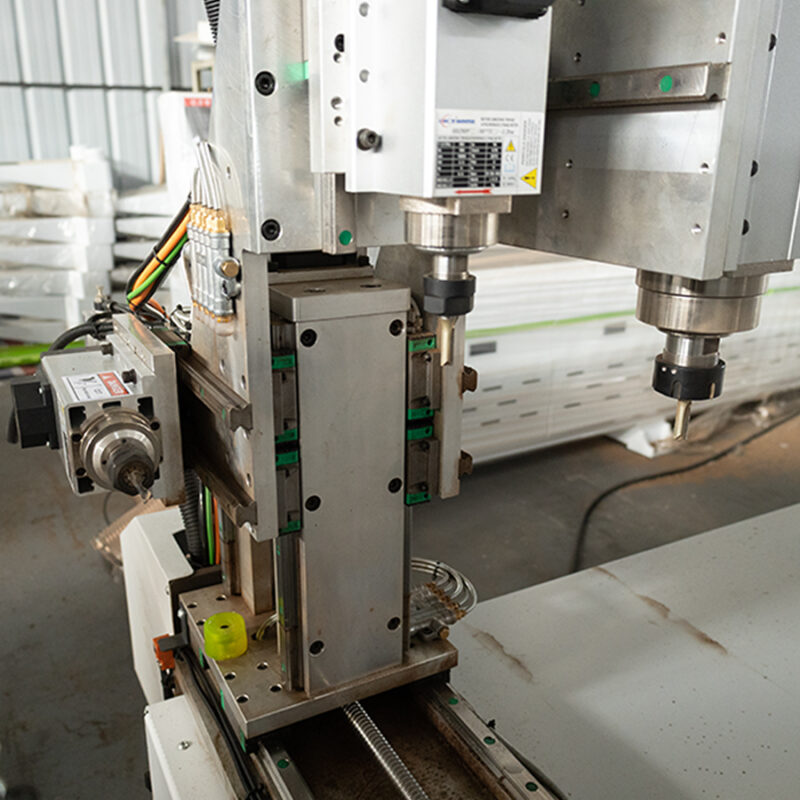
Drilling and slotting are completed in one go, improving efficiency and saving time.
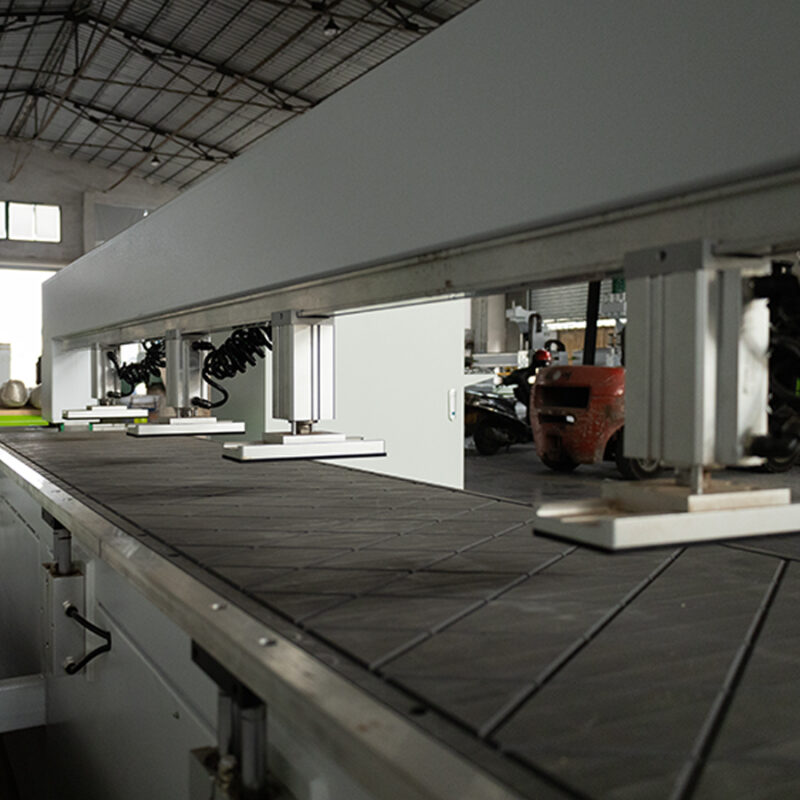
The machine uses a high-strength PVC tabletop to prevent wear and tear that could lead to errors.
How a Drilling, Milling and Copying Machine Works
This machine drills, mills and copies shaped parts such as chair and table legs, rails and curved components. A template or copy follower traces the profile while spindles cut it, so identical shaped parts are produced repeatably without CNC programming for simple profiles.
Panel furniture side drilling, suitable for various applications including long and short pieces, three-in-one holes, dowel holes, blind holes, long grooves, and short grooves.
Frequently Asked Questions
- Q: What is a drilling, milling and copying machine used for?
- A: It makes repeated shaped wood parts — chair legs, rails, balusters and curved components — by copying a template.
- Q: Do I need CNC programming for copying?
- A: Simple profiles run from a physical template with a copy follower; CNC versions handle complex, programmed shapes.
- Q: What materials can it machine?
- A: Solid wood and some MDF/composite blanks sized to the machine’s capacity; confirm max length and section.
- Q: How consistent are copied parts?
- A: The template fixes the shape, so every piece matches within machining tolerance — ideal for sets of furniture.
- Q: What is the difference from a CNC router?
- A: A copy machine repeats a traced profile quickly and cheaply; a CNC router cuts any programmed 2D/3D shape but needs CAD/CAM setup.
- Q: What is the typical output?
- A: Several to dozens of parts per hour depending on complexity and whether it is single- or multi-spindle.
Browse more Drilling, Milling and Copying Machine range, or contact Leabon for a confirmed quotation.