
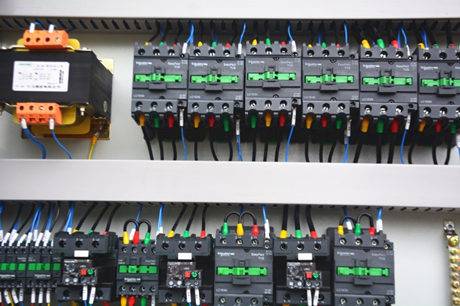
Branded Electrical Parts
The electrical parts use Schneider Brand or SIEMENS Brand.

Durable Spindle
Main spindle of the equipment use Japan NSK and Sino-Japan manufactured TR bearing.
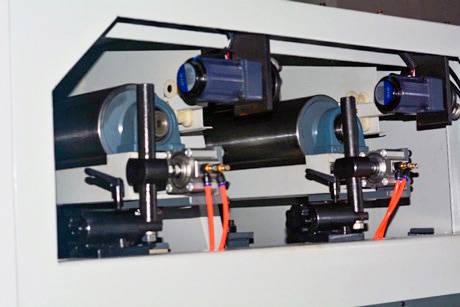
Heavy Duty 3 Rollers Structure
Sanding paper swing controlled by Omran photoelectric.
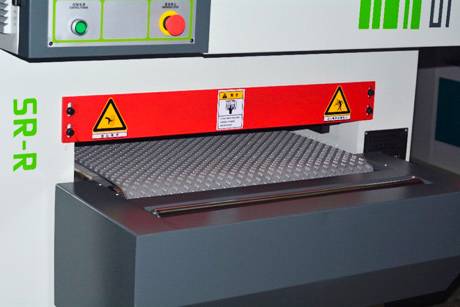
Drum Sander Conveyor
Conveyor use marble material, its shape won’t be changed because of temperature. Precision and grinding duration is higher than steel conveyor.
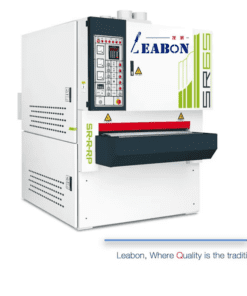
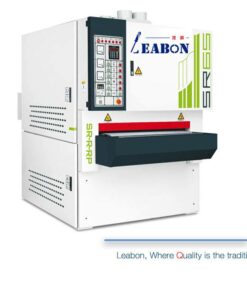
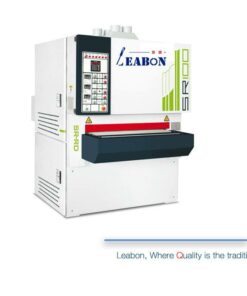
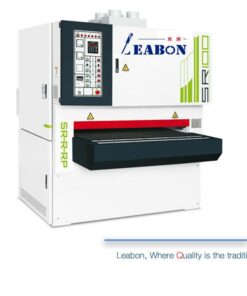
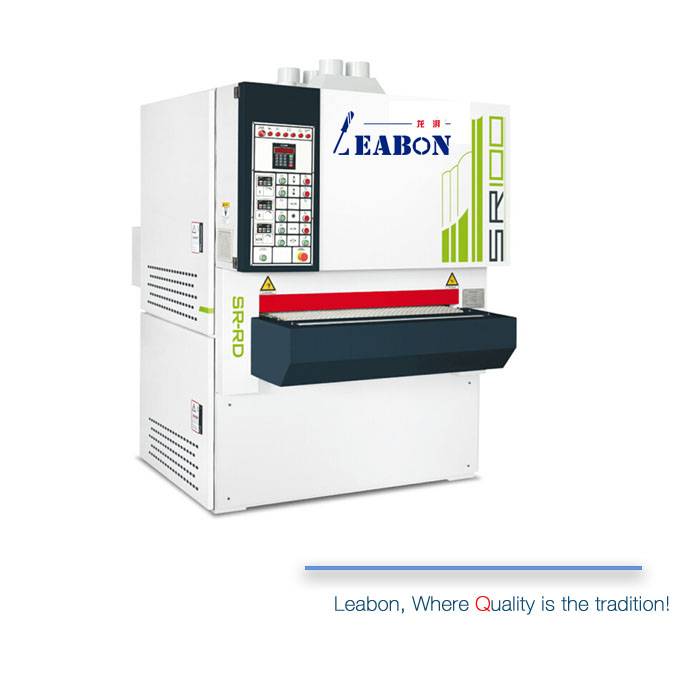
Woodworking Lacquer Sanding Machine SR-RD1000-1300 Features
- Work piece thickness displayed by micro-computer button type thickness dis-player, precise and durable.
- Sanding paper swing controlled by air power, swing is smooth and even.
- Front and back double emergency knob, can control the machine to urgently stop within 3-5 Seconds.
- Faults Display fitted (sanding paper right and left deviation, inadequate air pressure, emergency knob, and over thickness work piece). It’s easy to judge basic equipment trouble. Faults emergency stop adopts automatically descend protection facility, thus the panel surface won’t be damaged from emergency stop.
- Use branded conveyor, grinding duration is 3-5 times as ordinary conveyor.
- Conveyor fit with automatic centering facility.
- Conveyor speed adjusted by frequency controller, easy adjusting. It can be adjusted as per the work piece in processing to improve sanding quality.
- Sanding paper swing controlled by Omran photoelectric.
- 1st group sanding roller use 240mm diameter eccentric steel thickness roller, high smoothness, heavy sanding quantity; 2nd group roller use 210mm diameter, 70 shore hardness thickness roller and fit with ex-tractable polishing pad.
- Conveyor use T shape screw pole craft, high precision.
- Main motor automatically star triangle(Less pressure) start.
- Main spindle of the equipment use Japan NSK and Sino-Japan manufactured TR bearing.
- The electrical parts use Schneider Brand .
- Conveyor use marble material, its shape won’t be changed because of temperature. Precision and grinding duration is higher than steel conveyor.
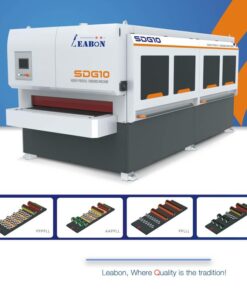
How a Lacquer Sanding Machine Works
A lacquer sander uses fine belts and controlled dust extraction to polish cured lacquer and paint surfaces without burning or loading the abrasive. It de-nibs between coats and delivers a smooth, coat-ready or final finish on panels and doors.
This lacquer sanding machine is designed to sand and polish lacquer and painted surfaces on different materials, including hard solid wood, fine wood, plywood, doors, and furniture. After sanding, the surfaces are smooth and ready to be painted again with a surface painting creating an ideal surface finish.
Frequently Asked Questions
- Q: What is a lacquer sander used for?
- A: It polishes cured lacquer and paint on panels and doors, de-nibbing between coats for a smooth finish.
- Q: What is the difference from a wide belt sander?
- A: A lacquer sander uses finer belts and gentler pressure to avoid burning coating; a wide belt removes material.
- Q: What panels can it finish?
- A: Lacquered, painted and veneered panels up to the machine’s width.
- Q: Does it need strong dust extraction?
- A: Yes — fine dust must be removed; connect to a dedicated collector.
- Q: What grit sequence is used?
- A: Very fine belts, often with brush de-nibbing; Leabon sets the sequence per finish.
- Q: Is training included?
- A: Yes — setup guidance, operation training and spare-part support are provided.
Browse more Lacquer Sanding Machine range, or contact Leabon for a confirmed quotation.