
As a pivotal piece of equipment within the timber processing industry, the importance of the board planer is self-evident. It serves not only as a vital tool for enhancing the surface quality of timber but also as a critical link in achieving efficient, high-quality wood processing. This article provides a professional, in-depth analysis of the board planer, exploring its structural components, operating principles, applications, and future development trends.
A board planer primarily consists of a feeding mechanism, a planing unit, a discharge mechanism, and a control system. Among these components, the planing unit constitutes the core element; utilizing high-speed rotating cutter blades, it cuts and planes the timber surface to remove defects—such as burrs and unevenness—thereby rendering the wood surface smooth and level. In terms of operating principles, the board planer employs either mechanical or hydraulic transmission systems to drive the cutter blades at high rotational speeds. Timber enters the planing zone via the feeding mechanism; upon contact with the blades, the wood surface undergoes the cutting and planing process. Once planed, the timber is discharged through the discharge mechanism, thereby completing the entire processing cycle.
Board planers are widely utilized across various sectors, including furniture manufacturing, architectural decoration, and flooring production. In furniture manufacturing, planers effectively eliminate surface burrs and irregularities, resulting in furniture surfaces that are smoother and aesthetically more pleasing. In architectural decoration, these machines enable the precision finishing of timber, thereby elevating the overall quality and sophistication of interior projects. In flooring production, planers ensure that floor surfaces are exceptionally flat and smooth, ultimately enhancing both the service life and the comfort of the flooring.
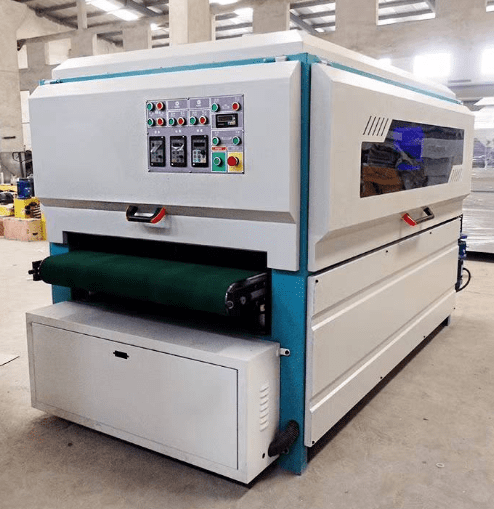
The technical features of a board planer include:
Efficiency: The board planer enables high-speed rotation and continuous processing, significantly boosting wood processing efficiency.
Precision: Featuring high-precision planer blades, the machine allows for precise control over planing depth and width, thereby ensuring high processing quality.
Stability: The equipment boasts a stable structural design and smooth operation, guaranteeing consistent and reliable performance over extended periods.
Safety: Equipped with safety protection mechanisms, the machine effectively prevents accidents during operation.
Future Development Trends for Board Planing Machines
(1) Technological Innovation Drives Development:
With the continuous advancement of automation technology in woodworking machinery, board planing machines are poised to undergo significant technological innovation. For instance, the application of CNC technology will render the adjustment and control of planing machines more precise and convenient, thereby enhancing both processing efficiency and quality. Furthermore, the research, development, and refinement of planing techniques—such as the single-pass cutting technology utilized in four-sided planers—will further boost the processing capabilities and efficiency of these machines.
(2) Sustained Growth in Market Demand:
As industries such as furniture manufacturing and architectural decoration continue to expand, the standards for board surface quality are constantly rising; this trend will fuel a sustained increase in the demand for board planing machines. Additionally, the international market’s demand for high-quality wood polishing machinery will provide a vast market space for board planing machines.
(3) Environmental Protection and Energy Conservation Emerge as Key Trends:
Board planing machines will increasingly prioritize the reduction of energy consumption and waste emissions, adopting more environmentally friendly materials and manufacturing processes.
(4) Enhanced Levels of Intelligence and Automation:
Board planing machines will incorporate a greater number of sensors and control systems to facilitate automated operation and real-time monitoring, thereby improving the processing precision and operational stability of the equipment.
(5) Supply Chain Integration and Industrial Upgrading:
As a critical link within the industrial supply chain, board planing machines stand to benefit from broader supply chain integration and industrial upgrading, leading to improvements in both production efficiency and product quality.
As a pivotal piece of equipment within the timber processing industry, the importance of the board planer is self-evident. Through a professional analysis and in-depth exploration of its applications, we can clearly discern the vital role it plays in timber processing, as well as its vast potential for future application. Moving forward—driven by continuous technological advancements and ongoing market expansion—the board planer will continue to fulfill its critical function, making even greater contributions to the growth and development of the timber processing industry.
