
In the production process of custom panel furniture for entire homes, the final packaging stage has long been a critical bottleneck characterized by high labor intensity and significant material waste. Traditional manual packaging methods suffer from low efficiency and inconsistent quality, making them ill-suited to the demands of handling diverse specifications and small-batch custom orders.
Designed specifically for panel furniture, this smart, comprehensive packaging solution—featuring modular equipment combinations and flexible layouts—enables factories to achieve standardized packaging, streamline labor, and minimize material waste, making it an essential component for upgrading to intelligent manufacturing.
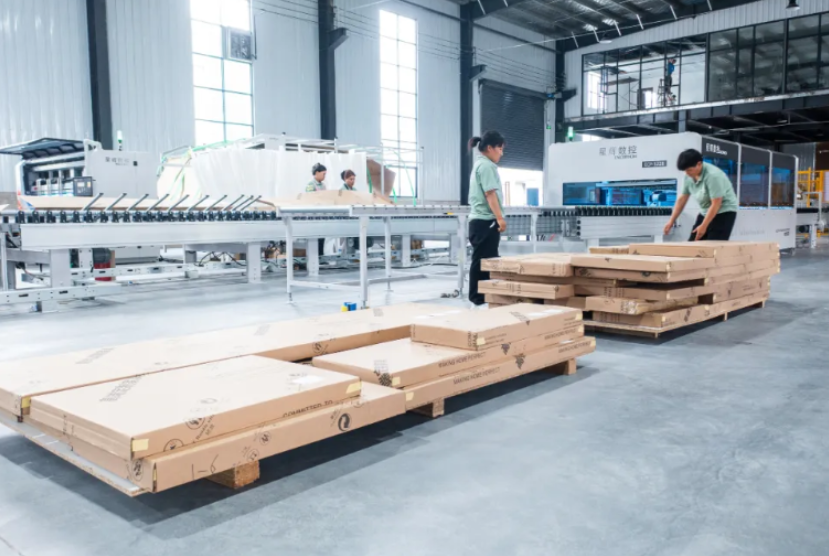
Industry Pain Points in Traditional Panel Furniture Packaging
Most small and medium-sized panel furniture factories still rely on manual processes for measuring, cutting cardboard, and sealing packages. Manual operations are heavily dependent on worker proficiency, leading to significant discrepancies in carton fit; this frequently results in the shifting of panels during transit or the wastage of packaging materials.
Furthermore, packaging quality lacks uniformity, contributing to high rates of damage from bumps and impacts during long-distance logistics. Packaging lines are labor-intensive, facing challenges such as recruitment difficulties during peak seasons and rising labor costs. Additionally, the slow pace of adapting to different product models makes it difficult to keep up with the rapid turnover of customized orders.
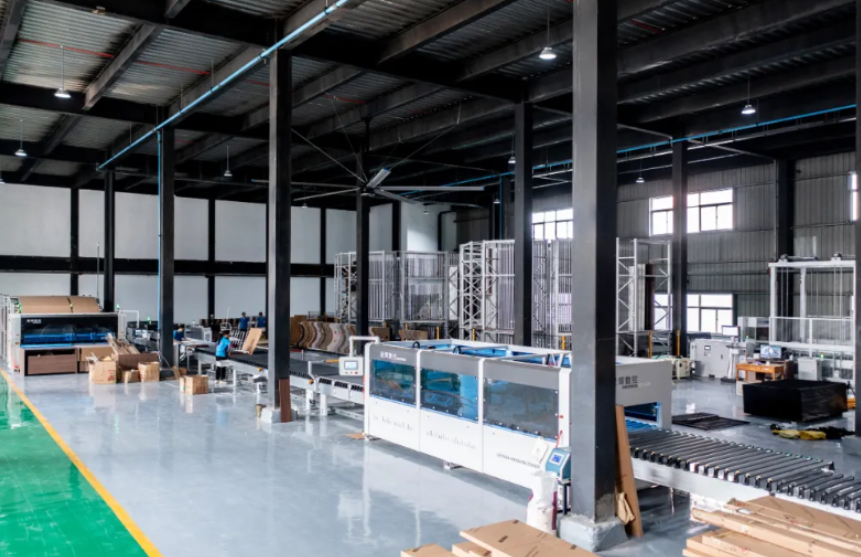
Modular Architecture of the Smart Packaging Line
The smart packaging system features a modular design, allowing for flexible layout configurations tailored to factory floor space and production capacity requirements. The system comprises core units such as paper cutting equipment, measuring stations, inclined sheet feeders, lid-folding machines, and case sealers.
It also incorporates auxiliary stations—including powered palletizing platforms and gravity roller packing tables—to ensure seamless process transitions and collaborative operation through data integration. This creates a complete, closed-loop workflow extending from the initial input of panels to final case sealing and dispatch.
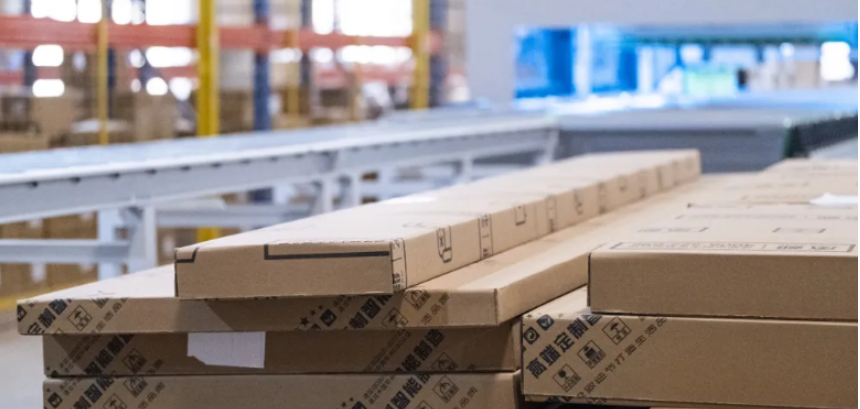
Advantages of Flexible Adaptation and Site Customization
Unlike large, fixed production lines, these smart packaging solutions offer exceptional flexibility. They can be flexibly arranged to suit the specific dimensions and layout of the workshop and production line flow, allowing factories of all sizes to configure the system according to their needs.
The system rapidly adapts to product changeovers—handling panels for cabinetry of various sizes and shapes—without the need for complex recalibration. It accommodates both small-batch, custom orders and large-scale mass production, effectively minimizing productivity losses caused by downtime during setup adjustments.
Standardized Operations Enhance Packaging Quality and Brand Image
Leveraging precision measurement and CNC cutting technologies, the smart packaging line ensures a tight fit between the carton and the panel, resulting in clean, uniform edges. Automated flap folding and sealing processes adhere to consistent standards, producing neat, square packages free from misalignment or creases.
This stable packaging process not only elevates the product’s visual appeal and brand image but also minimizes damage—such as impacts or carton bursts—during logistics and transport. By reducing costs associated with damage claims, the system meets the rigorous requirements of both e-commerce fulfillment and large-scale project orders.
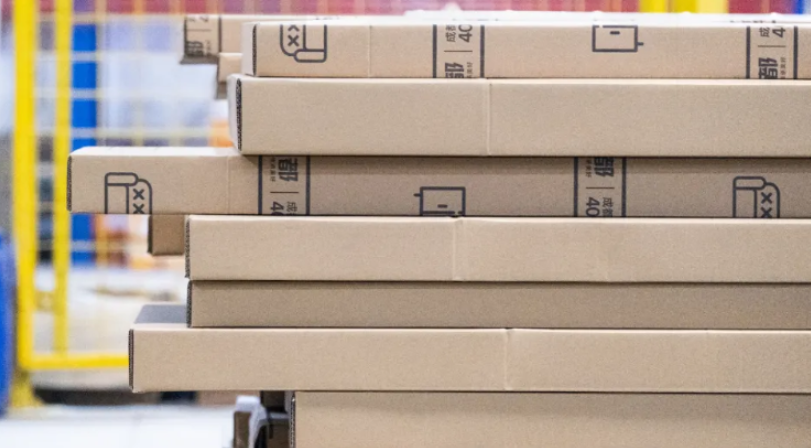
The practical value of cost reduction and efficiency enhancement for the factory
The implementation of smart packaging lines significantly reduces the manual workforce required at packaging stations, enabling operations with minimal human oversight and delivering long-term, stable savings on labor costs. Precision cutting modes effectively manage cardboard margins, driving material waste rates down to new lows.
At the same time, automated operations maintain a consistent pace—unaffected by human fatigue or shift constraints—thereby continuously boosting downstream packaging capacity. This effectively eliminates the final bottleneck in production, helping panel-processing factories transition toward scaled, standardized, and digitalized manufacturing.
