

How a Vacuum Membrane Press Works
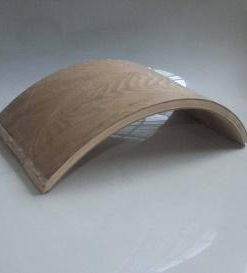
A vacuum membrane press lays a PVC or veneer film over the panel, then draws a vacuum so a silicone membrane pulls the film tight around profiled surfaces while heat activates the glue. This wraps raised-panel doors, drawer fronts and 3D components in one cycle that a flat press cannot do.
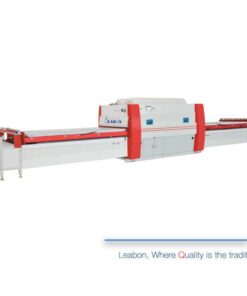
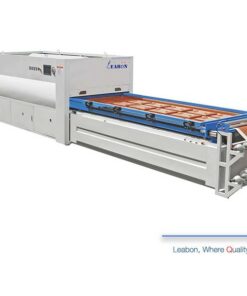
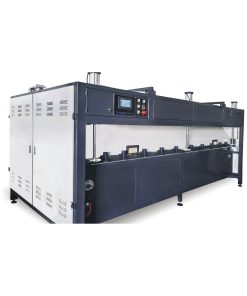
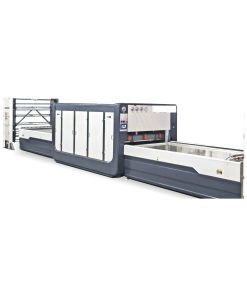
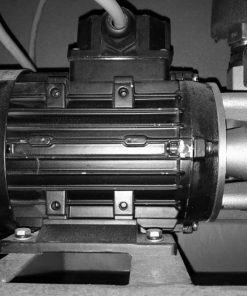
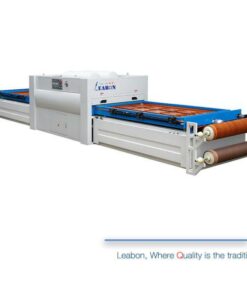
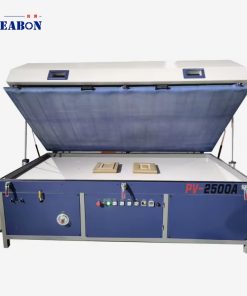
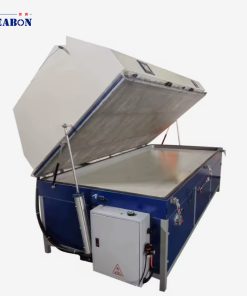
This excerpt introduces the **PV-3000A Lamination Vacuum Press Machine** from Foshan Leabon Machinery. It has overall dimensions of 3430×1550×1500mm, table size 3000×1300×50mm, total power 20.5kW, upper zone heating 18kW, and is equipped with an XD‑100 vacuum pump.
Frequently Asked Questions
- Q: What is a vacuum membrane press used for?
- A: It wraps PVC, veneer and PET films around profiled MDF for raised-panel doors, drawer fronts and 3D furniture parts.
- Q: What is the difference from a flat press?
- A: The membrane conforms to curves and profiles under vacuum; a flat press only bonds flat surfaces.
- Q: What film materials are supported?
- A: PVC, veneer and PET membranes sized to the platen; confirm the film and thickness with Leabon.
- Q: How large a panel can it press?
- A: Platen sizes cover single doors up to multi-door formats; pick to match your door size.
- Q: What is the typical cycle time?
- A: A door wrap often finishes in a few minutes including heat-up and cooling, depending on film and shape.
- Q: Is a vacuum membrane press hard to run?
- A: It is operated from a control panel with set programs; training is provided.
Browse more Vacuum Membrane Press range, or contact Leabon for a confirmed quotation.
Related vacuum press models
See the whole range on the vacuum membrane press category page, or compare with hot presses and cold presses for flat panel pressing.